


Fabric testing standards encompass a wide range of regulations and requirements across the textile manufacturing industry. Adhering to these standard practices ensures that textile products consistently meet the highest quality benchmarks. But what exactly are these standards, why do they matter, and which methods are commonly used? Explore this comprehensive guide from Dugarco for the most specific answers!
1. What are Fabric Testing Standards?
Fabric testing standards refer to a series of quality assessments performed on textiles throughout the production cycle—from raw material sourcing to the final product. Every textile product must undergo rigorous inspection before it is released to the market to ensure global compliance.

These standards ensure that products retain their intended physical and chemical properties and pose no harm to human health. By testing for color vibrancy, fraying resistance, and chemical safety, kiểm tra tiêu chuẩn vải guarantee that consumers receive durable and safe materials.
2. The Importance of Fabric Test Standards
Maintaining strict kiểm tra tiêu chuẩn vải is vital for several reasons:
- Establish benchmarks for quality and conformity of raw materials.
- Strictly monitor the production process to maintain consistency.
- Identify and isolate defective materials before they reach the consumer.

- Provide a framework for Research and Development (R&D).
- Ensure the final product meets international safety requirements.
- Facilitate smooth market entry for exported textile goods.
>>>> XEM NGAY: Tiêu chuẩn dệt may hữu cơ toàn cầu (GOTS) trong ngành may mặc
3. 6 Key Methods for Fabric Quality Testing
Various methods are used to assess the quality of yarn and fabric. These techniques evaluate resistance to impact, abrasion, and chemical safety. Here are 6 essential fabric testing methods:
3.1. Physical Testing
Physical testing focuses on the structural properties of the material. Experts collect data on weight, unit length, stiffness, and coating thickness. This ensures that the fabric meets the specific physical criteria required for its intended use.

3.2. Mechanical Testing
According to kiểm tra tiêu chuẩn vải, mechanical methods evaluate factors like shrinkage, stress, bending, and tearing. These tests measure the breaking strength and tear resistance under specific conditions, ensuring the fabric is durable enough for everyday wear.

3.3. Chemical Testing
Chemical testing ensures fabrics are free from harmful contaminants such as toxic heavy metals, formaldehyde, and carcinogens. In specialized fabric testing labs, experts also conduct burn tests to measure flammability and analyze how quickly flames might spread. Additionally, this method tests pH levels and colorfastness against light and perspiration.

3.4. Tensile Durability Test
This method determines the maximum tension a fabric can withstand. Following kiểm tra tiêu chuẩn vải, tensile devices pull the material until it reaches its breaking point. This helps manufacturers understand the fabric’s elasticity and limits.
3.5. Abrasion Resistance Test
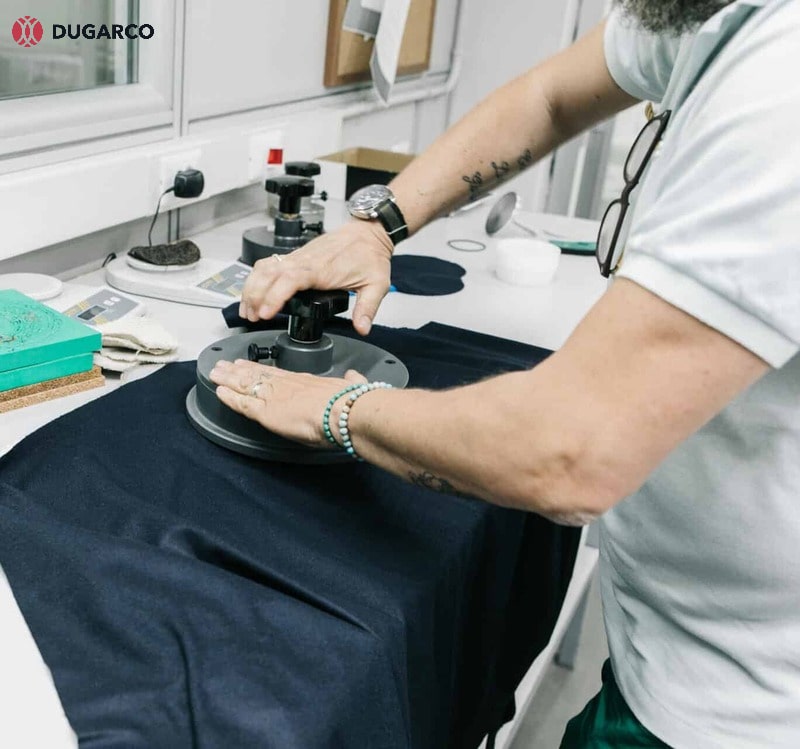
To simulate long-term wear, experts rub the fabric surface continuously. Two primary methods are used under kiểm tra tiêu chuẩn vải: the Wyzenbeek method (back-and-forth rubbing) and the Martindale method (rubbing in a figure-eight pattern).

3.6. Fabric Pilling Testing
Pilling refers to the formation of small fiber balls on the fabric’s surface. Experts use the ICI box pile method, where samples are placed in a rotating box for a set duration to assess the fabric’s tendency to pill over time.

>>>> BẤM VÀO ĐÂY: Tiêu chuẩn Oeko-tex 100 | Định nghĩa và lợi ích
4. Common ASTM and ISO Fabric Testing Standards
Below are the most recognized kiểm tra tiêu chuẩn vải used globally:
- Standard D1388: Measures fabric stiffness and flexural properties.
- Standard D2261: Evaluates tear strength through the single-rip (tongue) procedure.
- Standard D2594: Tests the stretch and recovery properties of knitted fabrics.

- Standard D5034: Determines breaking strength and elongation (Grab Test).
- ISO 13935-1: Analyzes seam properties and maximum force during seam failure.
- ISO 13934-1: Tests tensile properties, including maximum force and elongation at break.
5. Organizations Regulating Fabric Testing Standards
The primary bodies setting kiểm tra tiêu chuẩn vải are the International Organization for Standardization (ISO) and ASTM International. These organizations ensure quality consistency across global supply chains. Additionally, regional bodies like the FTC (USA) regulate garment labeling and environmental claims.

6. Equipment and Conditions for Testing
Accurate testing requires specialized equipment and controlled environments. Standard conditions are typically set at 22°C and 65% Relative Humidity (RH) to meet ASTM and ISO specifications. Moisture control devices and rapid textile test chambers are often used to ensure precise results.

The article above provides a comprehensive look at kiểm tra tiêu chuẩn vải, their importance, and key methodologies. We hope this information helps you understand textile quality control better. Please contact Dugarco for further expert advice!
Thông tin liên lạc:
- Địa chỉ: 59 Duc Giang, Long Bien, Hanoi, Vietnam
- Điện thoại: 024 3655 7930
- Email: dugarco@mayducgiang.com.vn
- Website: https://dugarco.com/vi/
>>>> BÀI VIẾT LIÊN QUAN:
- Quy Định Ghi Nhãn Dệt May Mỹ, Anh, Canada Và Đức
- Tiêu chuẩn nội dung hữu cơ hay OCS | Thông tin chi tiết

Dugarco dưới sự lãnh đạo và dẫn dắt tài ba của Ông Hoàng Vệ Dũng đã từng bước trở thành nhà sản xuất quần áo lớn của Việt Nam, cung cấp quần áo cho nhiều thương hiệu nổi tiếng đến từ nhiều quốc gia khác nhau như Anh, Mỹ, Úc.






2 bình luận
What is the ISO standard for tensile testing?
what is the ICI pilling tester box, Martindale machine testing?