In today’s global marketplace, Low-Cost Country Sourcing: Advantages has become a pivotal strategy for businesses seeking to reduce costs, improve competitiveness, and expand their operations internationally. By sourcing products or components from countries with lower manufacturing or labor costs, companies can significantly enhance their profit margins and offer more competitive prices to their customers. This practice has gained widespread popularity due to the numerous benefits it offers, but it also comes with trends and best practices that businesses need to understand to succeed.
This article explores the core advantages of low-cost country sourcing, examines current trends shaping the landscape, and offers practical tips for effectively implementing this approach. Whether you’re new to sourcing or looking to refine your existing strategy, understanding these key elements is essential for maximizing benefits while minimizing risks.
>>>> LEARN MORE: The Top 15 clothing manufacturers in vietnam 2026
What Is Low-Cost Country Sourcing?

Low-cost country sourcing is a procurement strategy where companies choose to manufacture or buy their products from countries that offer cheaper labor, raw materials, or production costs. This approach allows firms to lower expenses, increase margins, and remain competitive in price-sensitive markets.
Simple Definition and Explanation
Think of low-cost country sourcing as a way of shopping smarter—by looking for the best value rather than just the closest or most familiar options. For businesses, this means identifying countries where goods can be produced at a fraction of the cost compared to domestic production, without sacrificing quality too much. Common target countries include China, India, Vietnam, Mexico, and Bangladesh, which have established industries and infrastructure conducive to manufacturing at lower costs.
Advantages of Low-Cost Country Sourcing

Hiểu được sự Low-Cost Country Sourcing: Advantages can help organizations make informed decisions when considering this strategy.
1. Cost Reduction
Implementing sourcing from low-cost countries typically results in substantial savings on labor, materials, and manufacturing overheads. This enables companies to increase their profit margins or pass savings onto consumers through more competitive pricing.
2. Increased Competitive Edge
Lower costs give firms the flexibility to innovate and improve offerings. Companies can invest in product development, marketing, and customer service while maintaining competitive pricing, thus strengthening their market position.
3. Greater Market Flexibility
Sourcing from diverse countries provides access to new markets for both procurement and sales, facilitating international expansion and diversification. It also offers buffer options if disruptions occur in one region.
4. Scalability and Capacity
Low-cost countries often have rapidly expanding manufacturing sectors capable of scaling operations quickly to meet demand, especially during peak seasons or when launching new products.
5. Access to Specialized Skills and Resources
Certain countries excel in specific manufacturing sectors or possess advanced technological skills that are less developed domestically, offering access to expertise and innovation.
6. Economic Development and Corporate Social Responsibility
Engaging in low-cost sourcing can contribute to economic growth in developing nations; however, it’s crucial to ensure ethical sourcing practices and fair labor conditions to align with corporate social responsibility.
>>>> SEE MORE: The Top 5 Nhà sản xuất quần áo phụ nữ in USA
Current Trends in Low-Cost Country Sourcing

The landscape of Low-Cost Country Sourcing: Advantages continues to evolve, driven by technological advancements, geopolitical shifts, and changing consumer expectations.
1. Digital Transformation and Automation
Automation and Industry 4.0 technologies are reshaping traditional manufacturing hubs in developing countries, enabling higher quality and efficiency. This reduces dependency on manual labor, balancing cost savings with quality.
2. Nearshoring and Regional Sourcing
A shift towards nearshoring—sourcing from countries closer to the primary market—has gained popularity due to shorter lead times, reduced transportation costs, and better control over supply chains.
3. Diversification and Risk Management
Companies are moving away from single-country sourcing to diversify their supply base, mitigating risks from geopolitical tensions, tariffs, or natural disasters.
4. Sustainability and Ethical Sourcing
Consumers and regulators increasingly demand transparency and sustainability in supply chains. Companies are adopting eco-friendly practices and ensuring ethical labor standards, which influences sourcing decisions.
5. Integration of E-Commerce and Digital Platforms
Online platforms and procurement marketplaces have simplified locating and managing international suppliers, enabling more agile and transparent sourcing operations.
Tips for Effective Low-Cost Country Sourcing

To maximize the benefits and minimize challenges, companies should follow these best practices.
1. Conduct Thorough Due Diligence
Assess potential suppliers for quality standards, financial stability, reputation, compliance with legal and ethical standards, and capacity to meet demand.
2. Build Strong Relationships
Developing long-term relationships with reliable suppliers fosters trust, better negotiation power, and collaboration on quality improvements and innovation.
3. Focus on Quality Control
Implement rigorous quality assurance processes, including audits, inspections, and testing, to ensure products meet specifications and standards.
4. Optimize Supply Chain Logistics
Plan logistics carefully to reduce lead times and transportation costs, considering proximity and infrastructure reliability of sourcing countries.
5. Balance Cost Savings and Risk Management
While cost is a key factor, always evaluate geopolitical stability, currency fluctuations, and political risks. Diversify sourcing regions to safeguard against disruptions.
6. Embrace Technology
Utilize procurement software, supply chain management tools, and data analytics to monitor supplier performance, forecast demand, and streamline operations.
7. Stay Updated on Trends and Regulations
Keep abreast of geopolitical developments, trade policies, tariffs, and sustainability standards that can impact sourcing strategies.
Best Countries for Low-Cost Sourcing
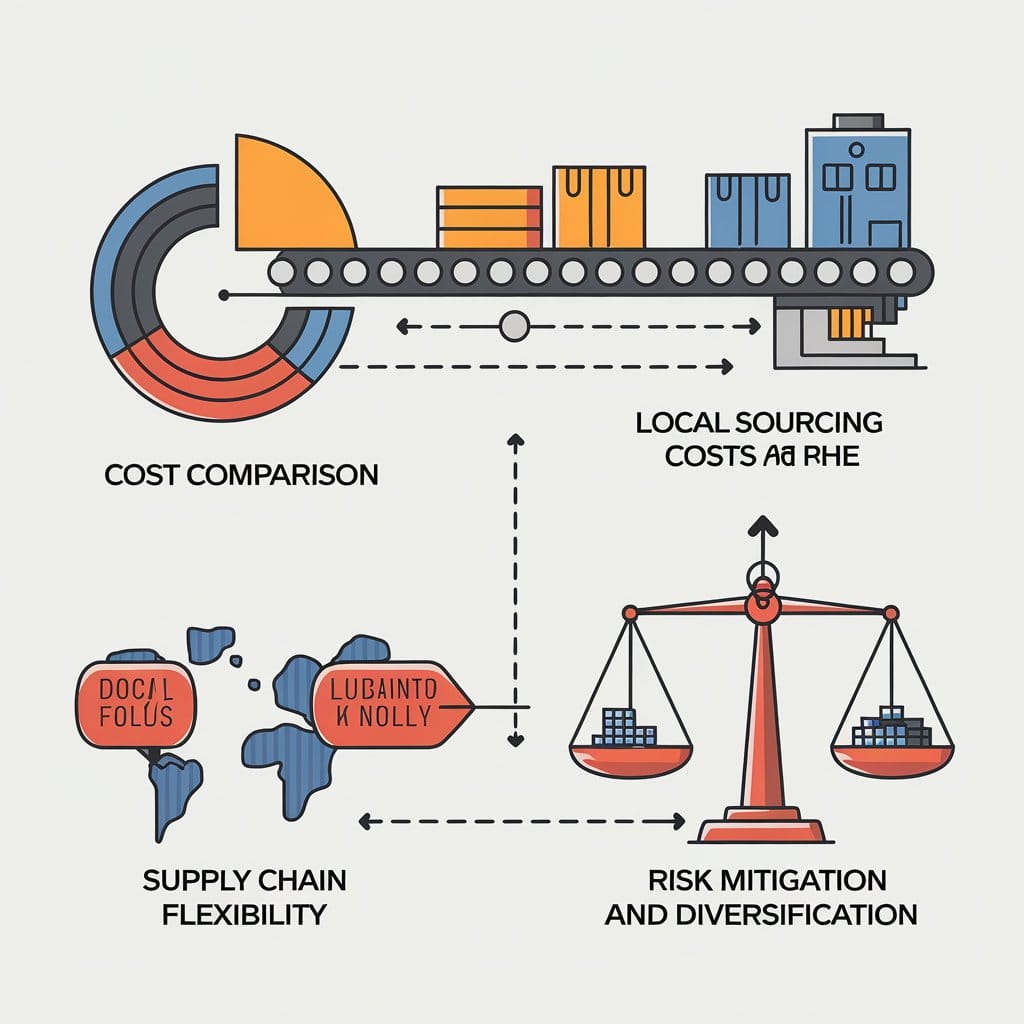
Different regions offer various advantages depending on the workflow, product type, and target markets. Here are some top options:
| Country | Key Advantages | Typical Industries | Challenges |
|---|---|---|---|
| Trung Quốc | Large manufacturing base, advanced infrastructure | Electronics, textiles, machinery | Rising labor costs, tariffs |
| India | Skilled workforce, cost-effective labor | Pharmaceuticals, textiles, IT hardware | Infrastructure gaps, bureaucratic delays |
| Vietnam | Competitive wages, proximity to China | Apparel, electronics | Limited skilled labor, logistics issues |
| Mexico | Near U.S. market, good infrastructure | Automotive, aerospace | Higher wages than Asia, trade agreements |
| Bangladesh | Low wages, established textile industry | Garments, textiles | Quality control challenges, infrastructure |
Conclusion
Low-Cost Country Sourcing: Advantages are pivotal for organizations looking to reduce expenses, expand their market reach, and innovate within competitive landscapes. The strategic benefits include cost savings, increased flexibility, access to diverse skills, and enhanced scalability. However, successful implementation hinges on understanding current trends such as automation, nearshoring, ethical sourcing, and diversification, alongside rigorous planning and relationship management. Companies must carefully evaluate potential sourcing countries, balancing costs against quality, risk, and sustainability considerations to achieve optimal results. Embracing technology, staying updated on geopolitical and regulatory shifts, and fostering strong partnerships are essential ingredients for thriving in the dynamic environment of low-cost country sourcing.

Dugarco dưới sự lãnh đạo và dẫn dắt tài ba của Ông Hoàng Vệ Dũng đã từng bước trở thành nhà sản xuất quần áo lớn của Việt Nam, cung cấp quần áo cho nhiều thương hiệu nổi tiếng đến từ nhiều quốc gia khác nhau như Anh, Mỹ, Úc.